Full English: da Vinci & Picasso
da Vinci is one room for four- to six-year-olds, entirely in English, with a foreign teacher — the class most of our international families choose. Picasso is the full-English class before it, from age two.
An English world, not an English lesson
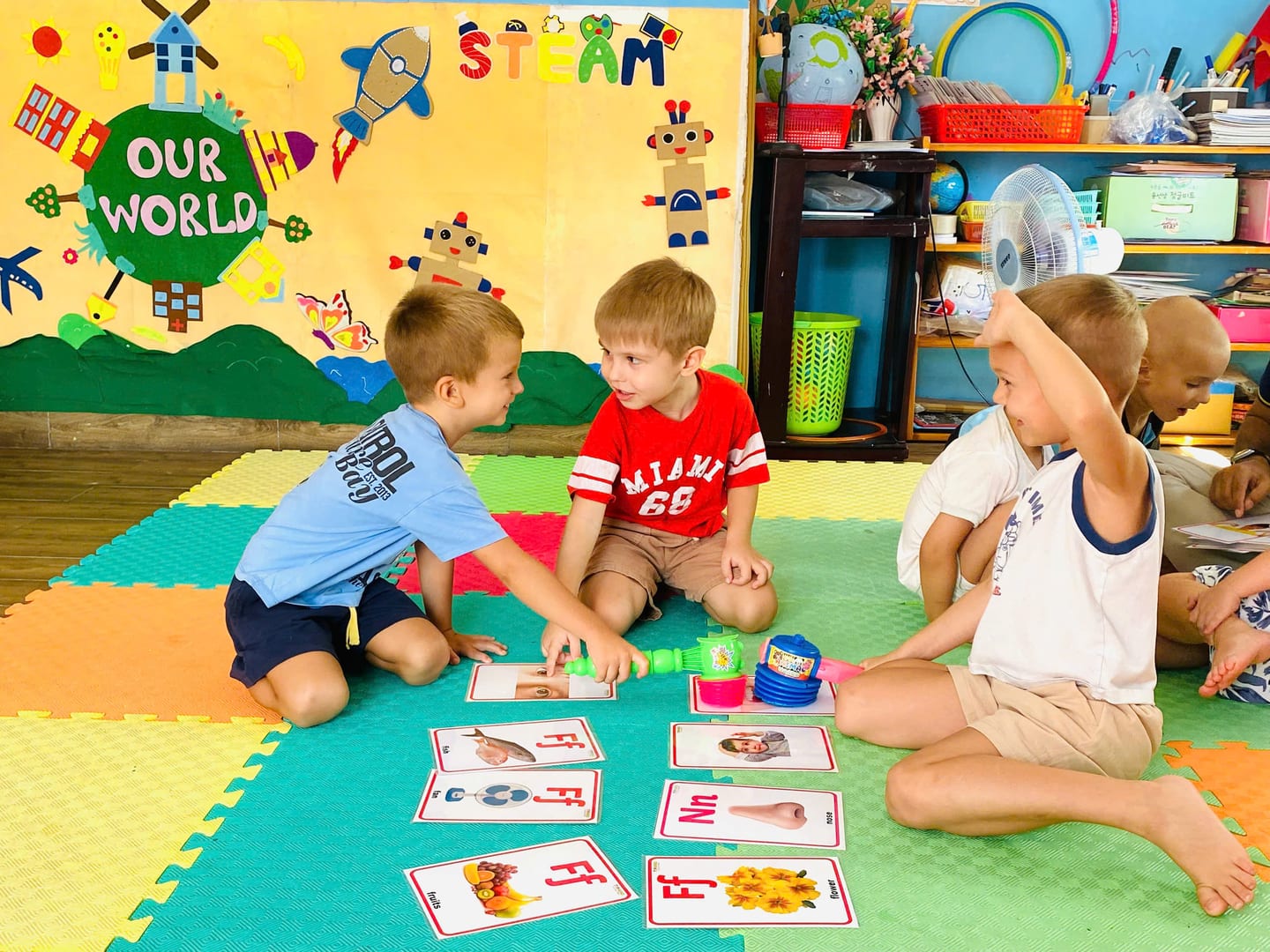
In da Vinci nothing is translated. Roll call, the songs, the arguments over who gets the blue cup — all of it happens in English, all day, which is why the children end up speaking it rather than reciting it.
- Ages 4 to 6 together in one room, on purpose
- A foreign teacher every weekday, not once a week
- Drama and role-play rather than worksheets
- The same care, meals and activities as every other class
Starting younger: Picasso
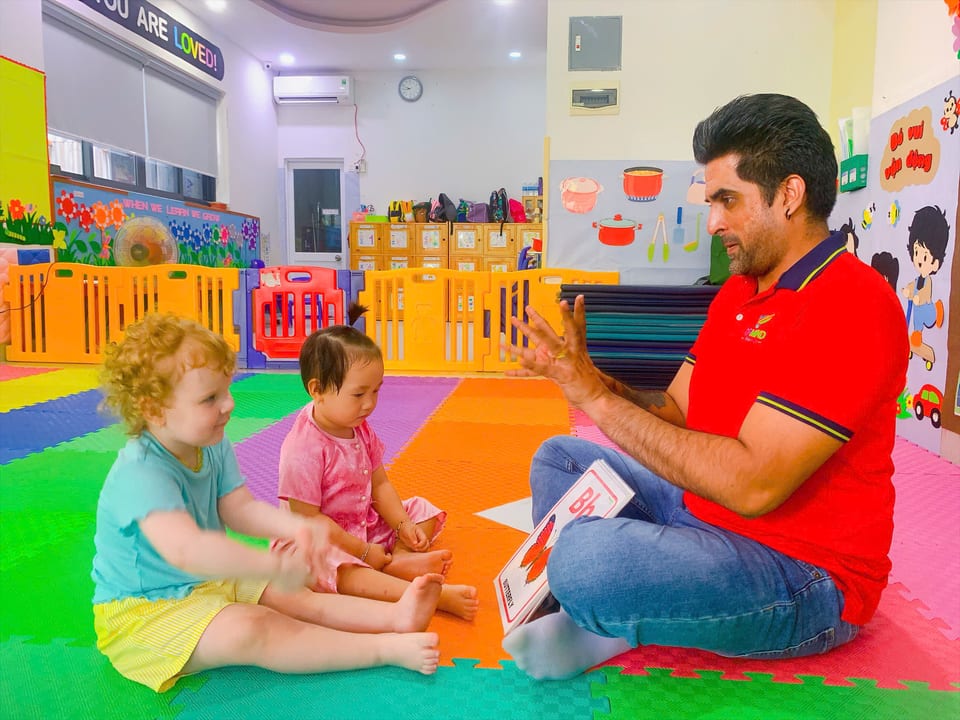
Picasso is our full-English class for two- to four-year-olds. The day runs in English the way it does in da Vinci, at a pace made for younger children, with their own teachers and their own room for the nap. From four, the next step is da Vinci.
- English all day, as in da Vinci
- The foreign teacher every weekday
- Swimming twice a week, and Taekwondo from age three
Three reasons the mixed-age room is the point
Putting a four-year-old and a six-year-old in the same class sounds like a compromise. It is the opposite.
Children teach each other
A six-year-old explaining a rule to a four-year-old is doing something no adult can do as well — using language at exactly the level the younger child is ready for, and cementing it for themselves in the process.
Nobody is the one who cannot speak
In a single-age class the newest child is visibly behind. In a mixed room everyone is at a different point already, so a child who arrives with no English is simply another child at another point.
The older ones grow into it
Being the one who helps changes how a child sees themselves. The six-year-olds in da Vinci are not waiting to move up; they are the ones who make the room work.
How the day feels
The rhythm rather than a timetable — the details shift with the term and the weather.
Arrival, breakfast and the circle
Children arrive, eat, and gather for roll call, the weather, the day of the week — the same words every morning until they belong to the child rather than the teacher.
The main learning block
Phonics, numbers, a story, a project. This is the concentrated part of the day, while everyone is fresh. On Tuesdays it starts with Taekwondo.
Outside, or the playground
A nature walk, outdoor games or the indoor playground, depending on the day — all of it still in English.
Lunch and nap
A hot lunch from the school kitchen, then a proper sleep. The quietest part of the day, and for the youngest the most necessary.
Drama, role-play and projects
The part of the day the children remember. Shops, doctors, restaurants, dragons — situations that need language, so language arrives. On Mondays and Wednesdays, swimming comes first.
Snack, stories and home
A last snack, a book, and a tidy handover so you hear about the day from someone who was in it.
Whole-school hours, meals and pick-up rules are on the A Day at TopMind page.
Does my child need English already?
No. Children join da Vinci with no English at all, and that is the ordinary case rather than the exception. For the first weeks a child understands through routine, gesture and what everyone else is doing — which is exactly how they learned their first language, and they are far better at it than adults are.
What we ask instead is patience during the quiet period. Most children understand a great deal before they say much, and the gap between the two can last weeks. It is not a sign that anything is going wrong.
A da Vinci child is a TopMind child
da Vinci is a different language, not a separate school.
- Four meals a day from the school kitchen
- Swimming twice a week, included
- Taekwondo once a week, included
- The same 7:00 to 17:00 day, Monday to Saturday
- Monthly photo reports for parents
- Saturday events, field trips and festivals
Come and watch a morning
The honest way to judge a class like this is to stand in it for an hour. Bring your child — they can join in while you watch.